
Home » Preventing Antisocial Behaviour in Parks: The Power of Precinct Activation

For local government asset managers, urban planners, and community safety officers across Australia, managing public open spaces presents a recurring challenge. Parks, youth precincts, and civic spaces are designed to be community assets, yet underperforming or poorly planned spaces frequently become hotspots for graffiti, vandalism, and loitering.
The traditional council response to these challenges is historically reactive. Budgets are routinely funnelled into restrictive measures: increased CCTV surveillance, heavy security patrols, defensive architecture, or physical fencing designed to exclude users.
However, at Outlier Skate, our extensive work with local councils demonstrates that exclusion strategies rarely solve the problem; they merely displace it.
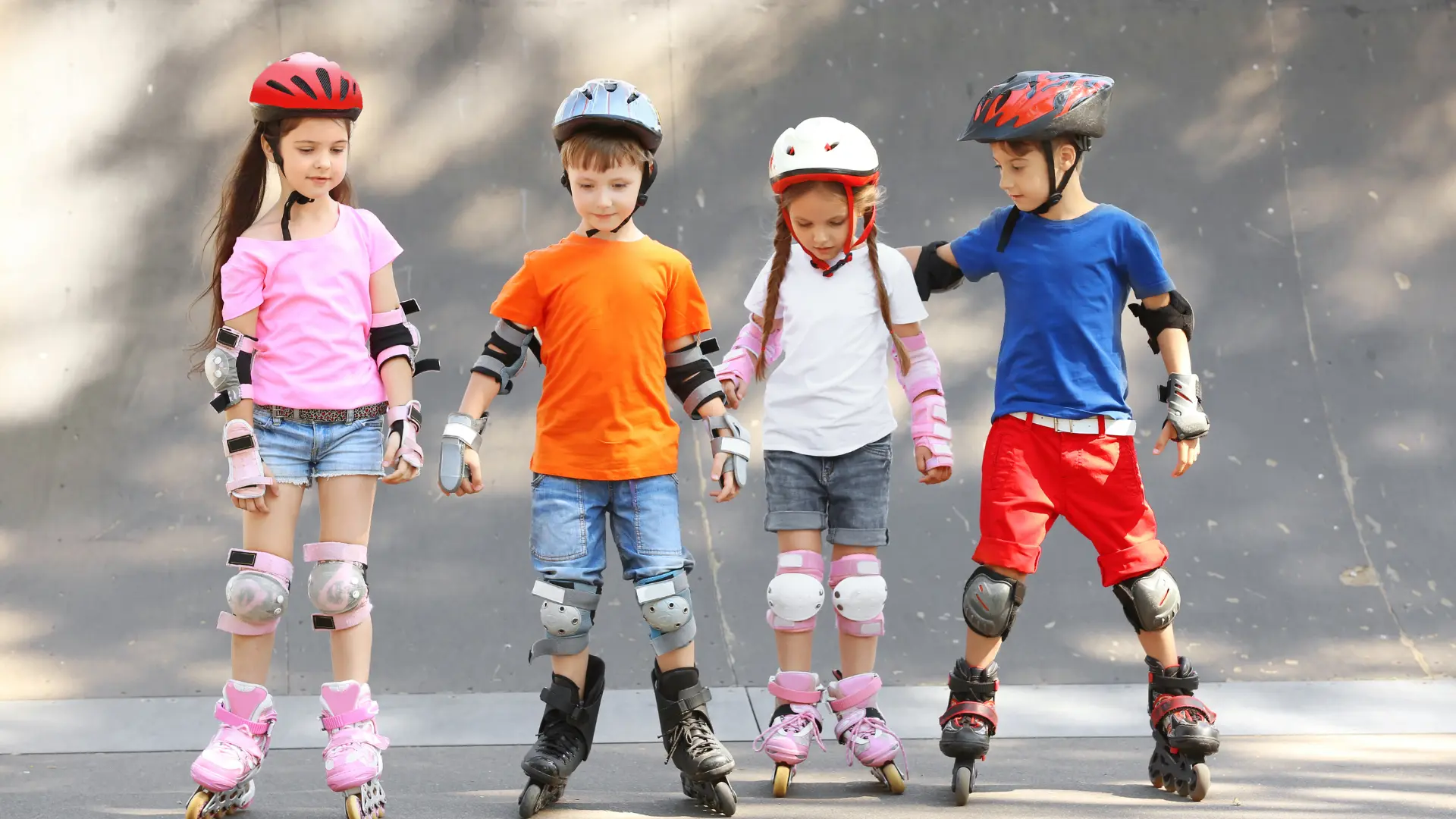
To genuinely succeed in preventing antisocial behaviour in parks, local governments must shift their paradigm from restriction to activation. When spaces are designed for community and built for skate, they naturally foster positive social dynamics, self-regulation, and high-yielding social infrastructure.
1. The Anatomy of an Underperforming Space
To solve security challenges within public assets, we must first understand why certain spaces attract negative behaviours while others thrive. In urban design, this is known as the study of “dead zones”.
Antisocial behaviour rarely occurs in highly activated, multi-generational spaces. It thrives in environments characterised by specific spatial failures:
The Isolation Factor: Spaces hidden away from natural foot traffic or lacking passive surveillance from nearby roads, businesses, or thoroughfares.
The Single-Use Trap: Facilities designed for a singular, narrow demographic without ancillary amenities, which limits the diversity of users throughout the day.
The Neglect Loop: The broken windows theory in practice. When a council takes months to repair minor vandalism or clean graffiti, it signals to the community that the space is unmonitored, inviting further degradation.
2. Redefining CPTED for Modern Youth Precincts
Crime Prevention Through Environmental Design (CPTED) is a well-established framework within Australian local government planning guidelines. However, traditional CPTED applications often skew too far toward defensive design,making spaces uncomfortable in an attempt to make them safe.
Modern CPTED principles should focus on positive activation. A skate specialist approach to auditing public parks looks at safety through three distinct design pillars:
Natural Surveillance (Eyes on the Park)
Instead of hiding a youth precinct behind dense landscaping or earth berms to mask noise, the asset should be visually open to the surrounding environment. Clear sightlines from adjacent footpaths, cafes, or car parks ensure that users are always visible to the broader public. This informal, organic monitoring is a far more effective deterrent than a digital camera on a pole.
Territorial Reinforcement
When a community feels a deep sense of ownership over a space, they naturally protect it. By engaging local youth in the co-design process, councils create an environment where the users themselves police the space. Skateboarders, BMX riders, and local youth subcultures are highly territorial in a positive sense, they want their training grounds to be clean, safe, and functional.
Image and Maintenance
High-quality, durable materials matter. Constructing facilities with premium, burnished concrete, integrated steel edge-protection, and high-grade urban furniture communicates to the public that the space is valued. When a precinct looks like a premium civic asset, it is treated like one.
3. The Outlier Methodology: Activation Over Restriction
Our core philosophy is clear: the most effective way to eliminate negative activity in a public space is to crowd it out with positive activity. This is the foundation of Precinct Activation.
An activated park is occupied by a diverse mix of demographics across a broad timeline. During the morning, the space might host parents with prams or older citizens utilising walking paths. In the afternoon, school-aged children, scooters, and skateboarders dominate the transitions. In the evening, adult riders and community groups utilise the space under high-spec sports lighting.
This multi-generational, multi-use approach changes the social dynamic of the space. It forces different subcultures to interact, negotiate usage, and coexist, creating a vibrant social hub that leaves zero room for illicit activities.
4. Leveraging Community Curve Data
To build an activation strategy that successfully counters antisocial behaviour, councils must move past generic community consultation surveys. You cannot design a safe space based on data gathered from an online poll that your primary end-users never saw.
Outlier Skate utilizes a data-driven approach called Community Pulse. Through meticulous behavioural mapping and ride-line tracing, we audit how a park operates in real-time. We track:
User Velocity and Flow: Identifying where physical conflicts occur between different user groups.
Duration of Stay: Measuring how long youth remain in the precinct and what amenities (shade, water, charging ports) extend their stay.
Dead Spot Identification: Pinpointing precise physical coordinates within the park that suffer from low use, which are highly susceptible to vandalism.
By mapping this data, we provide councils with actionable recommendations. Sometimes, preventing vandalism doesn’t require a security guard, it requires installing a basketball hoop, adding a public Wi-Fi node, or re-orienting a seating block to eliminate a blind spot.
5. Proving the Business Case: The Social ROI of Safe Spaces
Every capital expenditure within local government must be justified to ratepayers and council executives. Investing in specialist audits, high-end design, and ongoing activation programs can sometimes face internal resistance due to upfront costs.
However, the Social ROI of an activated, self-regulating park consistently outweighs the long-term maintenance costs of a neglected asset:
Direct Maintenance Savings: Councils spend thousands annually painting over graffiti and repairing broken assets in dead zones. Properly activated spaces see a dramatic reduction in these expenses.
Community Health Dividend: Providing safe, free, and accessible spaces for unstructured recreation directly combats youth isolation, supports mental well-being, and encourages physical fitness.
Local Economic Uplift: A highly populated, safe precinct drives secondary foot traffic to surrounding local businesses, injects vitality into night-time economies, and creates a welcoming atmosphere for visitors.
Transform Your Precinct Today
Preventing antisocial behaviour in parks is not achieved by locking gates or installing warning signs. It is achieved by designing spaces that command respect, invite high-volume positive use, and celebrate local community culture.
Meeting standard compliance regulations is simply the floor. To create a legacy asset that functions flawlessly, protects your council from liability, and serves as a genuine community heart, you need a partner who understands the exact intersection of local government processes and authentic subcultural design.
Is your council asset underperforming?
Don’t wait for safety challenges to define your public spaces. At Outlier Skate, we combine technical infrastructure expertise with human-centred engagement to deliver rigorous Audits, clear Community Pulse insights, and robust Activation work that turns ideas into spaces that genuinely work.
Contact Outlier Skate today and let’s collaborate to audit your park, eliminate risk, and activate your community infrastructure.
Outlier Skate
A specialist skatepark and precinct advisory team helping councils turn audits, community insight and upgrade planning into safer, better-used public spaces.
Recent Posts