
Home » Skatepark Design Standards Australia: Beyond Compliance

In the world of urban planning and local government, “compliance” is often treated as the finish line. When a council commissions a new youth precinct or a skatepark upgrade, the primary focus usually lands on meeting AS EN 14974:2021 (the current Australian Standard for skateparks). But if you’ve spent any time at a “ghost park” one of those multi-million dollar concrete facilities that sit empty while kids skate the local library ledges, you know that meeting a standard and meeting a community’s needs are two very different things.
At Outlier Skate, we believe that skatepark design standards in Australia should be the floor, not the ceiling. Our philosophy is simple: Designed for community. Built for skate. To build a space that actually works, you have to look past the blueprints and into the “ride-lines”. You have to move beyond generic surveys and into a Community Pulse. This is the definitive guide to navigating Australian skatepark standards in 2026 while ensuring your precinct becomes a high-functioning social asset.
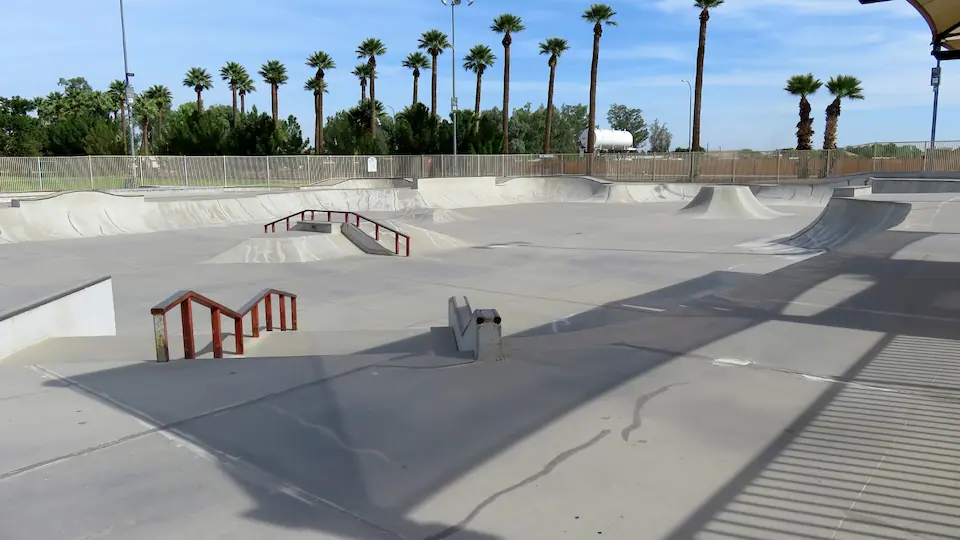
The Legal Foundation: Understanding AS EN 14974:2021
Since its adoption, AS EN 14974 has provided the technical framework for the safety and testing of skateparks in Australia. For Council Asset Managers and Risk Officers, this document is the bible. It covers everything from:
Impact Areas and Safety Zones: Ensuring there is enough “fall space” between obstacles.
Surface Consistency: The specific requirements for concrete finishes to prevent premature wear and injury.
Structural Integrity: How much weight a transition or ledge can take.
Access and Egress: How skaters and emergency services enter and exit the space.
While these standards are vital for insurance and liability mitigation, they are purely technical. They ensure the park won’t collapse and that the transitions are theoretically safe. However, they don’t account for flow. A park can be 100% compliant but 0% skateable if the obstacles are placed without an understanding of momentum and geometry.
The "Compliance Gap": Why Standard Parks Often Fail
We’ve seen it across every LGA in Australia: a council spends $800k on a compliant park that skaters hate. This is the Compliance Gap.
Most traditional design firms approach skateparks as “playgrounds”. They see a series of isolated objects. But a skater sees a system. When a designer who doesn’t understand “ride-lines” places a rail too close to a bowl, or a ledge at an awkward angle to a bank, they create “dead zones”.
At Outlier Skate, our Audit process looks for these dead zones. We don’t just check if the rail is the right height; we check if the approach allows for the necessary speed and if the landing area creates a conflict with other users. If a park is frustrating to use, the “community” will leave, and the “precinct” becomes a magnet for antisocial behavior because there is no positive activation keeping the space alive.
CPTED and the Social Infrastructure of Skateboarding
In Australia, Crime Prevention Through Environmental Design (CPTED) is a critical component of public space standards. For a skatepark to be successful, it must be integrated into the broader urban fabric, not hidden in a corner of a park behind a row of trees.
Key CPTED standards for Australian skateparks include:
Passive Surveillance: Can people see into the park from the street or nearby shops?
Lighting: Is the space usable and safe after 5 PM in winter?
Activity Mix: Are there seats for parents? Is there a water station?
Outlier’s Activation work focuses on turning these technical requirements into social outcomes. By designing for “all-day use”, we ensure that a diverse range of ages and demographics occupy the space. A busy park is a safe park.
Text
The Outlier Edge: Community Pulse Insights
Traditional community engagement usually involves a town hall meeting or an online survey. The problem? The people who use the park the most the 14-year-old skaters and the 25-year-old BMX riders, rarely show up to town hall meetings.
Our Community Pulse methodology changes the game. We use behavioural mapping and real-world “use data” to understand how a precinct is actually functioning.
Who is using the space? (Age, gender, sport)
When are they using it? (Peak times vs. dead zones)
Where are the conflict points? (Where do skaters and pedestrians cross paths?)
By bringing this data to the design phase, we help councils move from guessing to knowing. This isn’t just about making skaters happy, it’s about proving the Social ROI of the project to the board and the ratepayers.
Built for Skate: Technical Standards That Matter
If you want a park that lasts 20+ years, you have to look at the “Built for Skate” technical specs. Australian conditions are harsh with high UV, extreme heat, and in some areas, significant soil movement.
Concrete and Finish
The standard calls for smooth concrete, but the “Outlier Standard” requires a specific burnished finish that provides grip without being abrasive. If the concrete is too rough, it’s a “cheese grater” for skin, if it’s too smooth, it’s a sliding hazard when dusty.
Drainage
This is the most overlooked design standard. If a bowl doesn’t drain perfectly, it becomes a stagnant pond. We’ve audited dozens of parks where the “lowest point” of the drainage isn’t actually the lowest point of the concrete. This leads to premature asset degradation and constant maintenance costs for the council.
Lighting and Sound
In 2026, a “compliant” park includes smart lighting that can be dimmed or timed via a central council app. We advise on acoustic standards to ensure that the “clack-clack” of skateboards doesn’t become a nuisance for nearby residents, using landscaping and orientation as natural sound barriers.
The Future of Australian Skateparks: Multi-Use Precincts
The trend for 2026 and beyond is moving away from fenced-off “skate-only” zones and toward integrated youth precincts. These spaces combine skateboarding with basketball, parkour, bouldering, and social hangout spots.
Designing these requires a higher level of expertise in Conflict Mitigation. You cannot simply put a basketball hoop next to a skate ramp without expecting accidents. You need a partner who understands the “physics of play”. We use our ride-line tracing to ensure that every user group has their own “flow” while still feeling part of a singular, cohesive community hub.
Why Your Next Audit is Critical
Whether you are planning a new build or managing an ageing asset, a professional Audit is your best defence against liability and community dissatisfaction.
A standard safety inspector might tell you a bolt is loose. An Outlier Audit will tell you why your park is underperforming, how the design is contributing to user conflict, and what small “activation” tweaks can be made to double the daily visitation rates.
Text
Let’s Build Places People Actually Use
Meeting the Skatepark Design Standards of Australia is the bare minimum. At Outlier Skate, we want to help you build something better. We want to help you create a precinct that becomes the heart of your community, a place where youth feel seen, where the concrete is “Built for Skate,” and where the data proves the value of your investment.
Don’t just tick a box. Build a legacy.
Ready to elevate your precinct?
Whether you need a Safety & Usability Audit, a Community Pulse data deep-dive, or a full Activation Strategy, Outlier Skate is your bridge between council requirements and the skating community.
[Contact Outlier Skate Today]
Let’s turn your underperforming precinct into a high-functioning social hub.
Outlier Skate
A specialist skatepark and precinct advisory team helping councils turn audits, community insight and upgrade planning into safer, better-used public spaces.
Recent Posts